

Transformation COE - Len
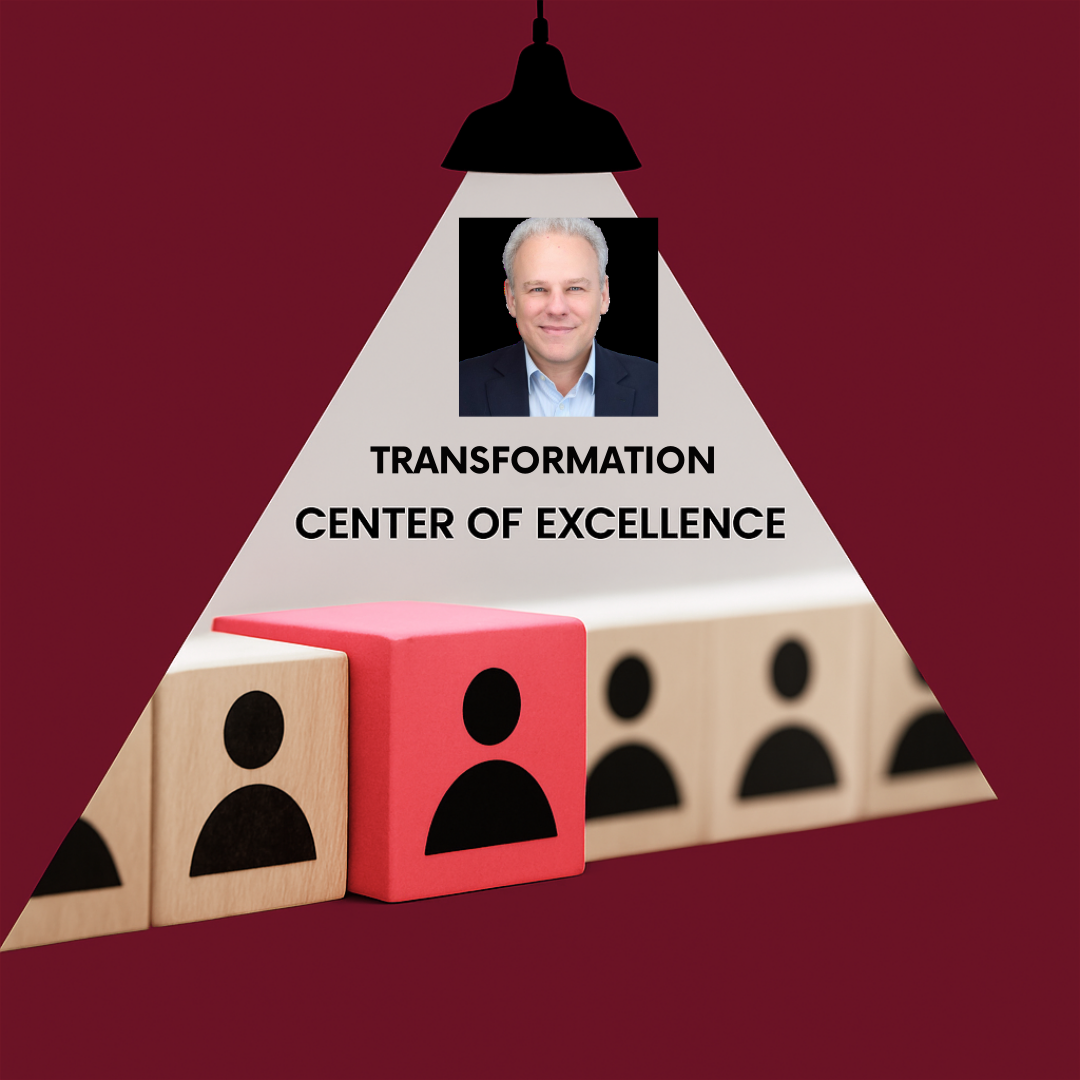
Len is a Chief Transformation Director with deep expertise in leading, developing, and delivering end-to-end transformations. He explains why leadership alignment and communication are key to successful transformations, and how he provides an objective perspective to business.
Q. How do you describe your independent consulting offering and the typical focus of your work?
I describe my work as "Expertise in Motion," focusing on bridging the gap between high-level strategy and tangible results. My focus is on translating complex operational blueprints into practical, sustainable improvements that achieve multi-year strategic growth.
Q. What are the specific benefits that you, as an independent, offer?
As an independent, I provide an unvarnished, objective perspective and the agility to move at a pace that firms - especially larger ones - often find difficult to match. Whether it be a global corporate undergoing a post-acquisition integration or an ambitious SME seeking an advisor to help it achieve the next stage of growth, I am best engaged when a business needs a safe pair of hands to navigate high-stakes operational change.
Q. Transformation is a very broad term, and like death and taxes, it's now a certainty. Where do you start the conversations when explaining what’s needed to undertake a strategic transformation at any level?
I always start by aligning the leadership team on an "Operational North Star," ensuring everyone understands the "why" behind the change before we tackle the "how." For me, de-risking a transformation begins with leadership and communication; if the vision isn't articulated clearly and repeatedly to the people on the front line, the strategy will struggle to take root.
Q. What makes transformation projects work, and where do they go wrong?
Success usually comes down to leadership alignment and the relentless pursuit of clarity at every level of the organization. As writers like John Kotter have found through extensive research, projects typically go wrong when they become overly academic and lose touch with the "gritty" operational realities of the shop floor, or when communication fails to overcome the natural inertia of a workforce.
Q. Describe a recent assignment in terms of success, outcomes, and personal learnings.
I recently led a $600M logistics transformation that achieved a 15% EBITDA increase by implementing service innovations that protected revenue during a period of market turbulence. A key learning was that "intellectual honesty" is a leader’s greatest asset; you must be willing to adapt the plan the moment the data on the ground contradicts your initial assumptions.
Q. What advice would you give to anyone about to embark on an independent career as to how they can provide the best results for a client, while fulfilling their own career path?
To provide the best results, you must aim to be "redundant by design," leaving behind the institutional muscle memory that allows a client to thrive long after you have gone, whether that be at a global corporate or an SME.
For your own path, stay relentlessly curious and genuinely interested in the stories of the people you meet; consistent networking is less about "sales" and more about the vital habit of learning from every sector and culture you encounter. You never know where a conversation might lead to further down the line!
Q. Finally, what do you like to do when you’re not working in the depths of AI Consulting?
When I’m away from the "engine room" of a project, I’m often exploring the intersection of technology and industry. I am an avid advocate on how 3D printing is revolutionizing global supply chains. I also find great reward in guest-lecturing and mentoring at business schools, where the "curious scepticism" of students keeps my own thinking fresh and challenged